%20(1).png?width=200&height=80&name=Trillium%20Counselling%20Logo%20(999%20x%20398%20px)%20(1).png "Trillium Counselling Logo (999 x 398 px) (1)")
Grief Counselling
Process your loss at your own pace and find steadier ground — in Kitchener-Waterloo and online across Ontario

Grief counselling helps you process a significant loss so the pain becomes more bearable and daily life feels manageable again. It is not about “getting over” someone or something you love. A therapist gives you a steady, unhurried place to tell the story of your loss, make sense of the waves of sadness, guilt or anger, and slowly rebuild a life that still holds the person you lost. At Trillium Counselling, our Registered Social Workers and Registered Psychotherapists provide grief counselling for a significant loss — the death of a loved one, pregnancy loss, the loss of a pet, a separation, or a major life change — in person in Kitchener-Waterloo and online across Ontario.
Last updated: September 2026
What is Grief?
Grief is what happens in you when you lose someone or something that matters deeply. It is often described as the anguish that follows a significant loss, and it rarely stays in one place: it can show up as a deep yearning, a fog of confusion, replaying the past, worrying about what comes next, and real physical exhaustion (APA). You might hear a few related words used along the way. Bereavement is the fact of having lost someone. Grief is everything you feel and do in response. Mourning is how you express it, shaped by your culture, your family and your faith.
Grief is not only about death. People grieve after a miscarriage, the end of a marriage, the death of a pet, a job loss, a serious change in their health, or a relationship that faded without a clear ending (Canadian Mental Health Association). Whatever you have lost, there is no right way to grieve it and no set timetable to follow, the process is often different for everyone.
Grief counselling, sometimes called grief therapy or bereavement counselling, is time set aside with a registered therapist to work through a loss. It is not about fixing grief or getting over it. It is about having a steady person beside you while you make sense of what happened, cope with what it has changed, and find a way forward that still honours what you have lost.
Symptoms of Grief
Grief can manifest physically, mentally and in changes to interpersonal relationships. You might recognize some of these signs, and it’s important to remember that none of them indicate you’re grieving incorrectly.
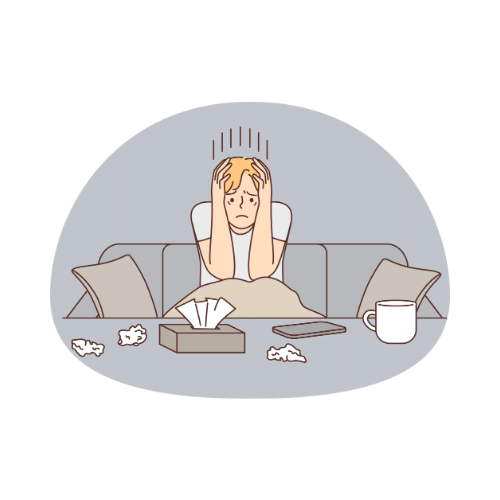
Waves of Sadness and Yearning
Grief tends to arrive in waves rather than as one steady feeling. A song, a date or an empty chair can bring a rush of sadness and a deep longing for the person or life you lost.

Shock, Numbness or Disbelief
Many people feel strangely flat or “not really here” in the early weeks. Numbness is a common first response, and it can be unsettling when you expected to cry.

Guilt, Anger or Regret
Replaying what you did or didn’t do, feeling angry at the situation, the person, or yourself, or feeling guilty for still being here are all part of grief for many people.

Trouble Sleeping and Low Energy
Grief lives in the body too. Poor sleep, fatigue, little interest in food, aches and a weakened immune system are common in the months after a loss.

Difficulty Concentrating or Deciding
“Grief fog” can make it hard to focus at work, follow a conversation or make even small decisions. This usually eases, but it can be frightening while it lasts.

Pulling Away From Others
Some people withdraw, avoid places and reminders, or feel that nobody understands. Others feel pressure to “be okay” for everyone else and hide how they really feel.
Not sure whether what you’re feeling is grief, depression, or both? Read our resource article on the 12 signs it may be time to talk to a therapist.
When Should you See a Therapist for Grief?
Most people get through grief with time and the support of the people around them. For most bereaved people, the intensity of grief eases over time, while for some it stays intense and disabling (American Psychiatric Association). Reaching out for counselling is not a sign you are grieving “wrong.” It is a way to get support that fits your loss.
It may be time to talk to a therapist if:
- The pain is not easing, or it is getting worse rather than changing
- You are struggling to function at work, at home, or as a parent
- You feel hopeless, worthless, or weighed down by guilt about the loss
- You are avoiding every reminder of the person, or you cannot stop thinking about them
- You are relying on alcohol, substances, or overworking to get through the day
- Your loss was sudden, violent, or traumatic, or you are grieving more than one loss at once
- You feel alone in your grief because the people around you do not understand it
It is typically reccomended to see a mental health professional when grief becomes very difficult to cope with, when you do not feel better over time, or when signs of depression develop alongside grief (CAMH).
How Can Counselling Help With Grief?
Grief counselling gives you a place where you do not have to manage anyone else’s feelings. Your therapist will listen to the story of your loss as many times as you need to tell it, help you understand the waves of sadness, anger, guilt or numbness, and support you as you work out what life looks like now. For many people, the goal is not to “let go” but to find a way to stay connected to the person they lost while re-engaging with living.
The research is encouraging and honest. A 2019 meta-analysis of 31 randomized controlled trials found that psychological treatment for bereaved adults produced improvements in grief symptoms, with the largest benefits for people who started with intense grief and for one on one therapy (Johannsen et al., Journal of Affective Disorders). Earlier reviews found that counselling offered to everyone who has been bereaved, regardless of how they are coping, shows only small effects, while therapy aimed at people who are struggling compares well with psychotherapy for other concerns (Currier, Neimeyer & Berman, Psychological Bulletin). In plain terms: if your grief feels heavy, stuck, or is getting in the way of your life, counselling is likely to help.
Practically, grief counselling can help you cope with the first birthday, holiday or anniversary; make decisions about belongings, homes or routines; handle guilt and “what ifs”; manage strained family relationships after a death; and return to work or parenting when you feel you have nothing left to give.
Types of Grief Therapy We Use
There is no single “grief therapy.” Your therapist will draw on approaches that fit your loss, your personality and where you are in the process. The most common at Trillium include:
Grief-informed talk therapy
Unhurried, person-centred sessions focused on telling the story of your loss, understanding your reactions, and finding ways to honour the relationship while rebuilding routines. This is where most grief counselling begins.
Cognitive Behavioural Therapy (CBT) for grief
CBT helps with the guilt, self-blame and avoidance that can keep grief stuck, and with the sleep and anxiety problems that often travel with it. Learn more about CBT at Trillium Counselling.
EMDR for traumatic loss
When a death was sudden, violent or witnessed, the memory of how it happened can crowd out the memory of the person. EMDR therapy helps the nervous system process those distressing images so grief can move forward.
Narrative and meaning-focused approaches
Narrative therapy helps you tell the story of your loss in a way that makes room for who the person was and who you are now, rather than only on the passing.
Acceptance and Commitment Therapy (ACT)
ACT helps you make room for painful feelings instead of fighting them, and reconnect with what matters to you so grief and living can coexist.
Our Grief Counselling Team in Kitchener-Waterloo
Most of our team works with grief and loss. Below are a few of the therapists at Trillium Counselling who support clients through grief, in Kitchener-Waterloo and online across Ontario. During your free consultation, we’ll match you with the therapist who’s the best fit for your needs, schedule, and goals — including team members not pictured here.






Right Therapist, Right Plan, Real Support
Whether it's a sudden shock or prolonged struggle, understanding your trauma with a therapist is the first step towards healing and reclaiming your life.
Types of Loss We Support
Every loss is different, and some are harder to talk about than others. Our therapists can work with the following, in person in Waterloo and online across Ontario.
Death of a parent, partner, child, sibling or friend
Whether the death was expected after a long illness or came without warning, losing someone central to your life reshapes everything. Counselling helps you grieve the person and the future you expected to have with them.
Sudden, violent or traumatic loss
Deaths by accident, suicide, overdose or violence often bring shock, intrusive images and unanswered questions on top of grief. Our trauma therapy team can help when the way someone passed is as painful as the fact that they are gone.
Anticipatory grief
Grieving before a death, when a loved one has a terminal illness, dementia or a long decline, is real grief (APA Dictionary of Psychology). Counselling can help you cope with the waiting, the caregiving, and the mix of sadness, exhaustion and guilt that often comes with it.
Miscarriage, stillbirth, pregnancy loss and infertility
Pregnancy loss is often grieved quietly and alone. A 2025 review of 29 studies found that about one in three women experienced anxiety or depression in the six weeks after a miscarriage (Shetty et al., Journal of Global Health). Our perinatal counselling team supports individuals and couples through loss, infertility and pregnancy after loss.
Loss of a pet
The bond with an animal companion is real, and so is the grief when they pass. Research consistently finds that people grieving a pet often feel embarrassed or unsupported in their loss (Park, Royal & Gruen). You will not need to justify your grief here.
Losses that are not a death
Separation and divorce, estrangement from family, a serious health diagnosis or loss of mobility, retirement or job loss, immigration, and losing someone to addiction or dementia while they are still alive can all bring genuine grief. When a loss is not recognized by the people around you, sometimes called disenfranchised grief, it can be especially isolating (APA Dictionary of Psychology). Counselling gives it room. See also our support for major life transitions.
Is It Grief or Depression?
Grief and depression can look similar from the outside, and they can happen at the same time. The American Psychiatric Association’s guidance draws the line this way: in grief, painful feelings come in waves and are often mixed with positive memories of the person who died, and self-esteem is usually preserved; in depression, mood and thinking are negative most of the time and feelings of worthlessness or self-loathing are common (American Psychiatric Association). The same guidance notes that for some people the death of a loved one can trigger major depression, and that when the two co-exist, grief tends to be more severe and last longer.
Signs that depression may be developing alongside grief include persistent hopelessness or worthlessness, thoughts of suicide, slowing down physically, and being unable to manage daily responsibilities (CAMH). Depression is diagnosed by a physician, psychiatrist or psychologist. Whether or not you pursue a diagnosis, our therapists can support you with both, and our depression counselling page explains how we work with low mood.
What Is Prolonged Grief Disorder?
Prolonged grief disorder (PGD) is the term for grief that stays intense and disabling well beyond what is typical for the person’s culture and circumstances. It was added to the DSM-5-TR in 2022. For adults, the death must have occurred at least 12 months ago (6 months for children and adolescents), and the person must have experienced at least three of eight symptoms nearly every day for at least the past month: identity disruption, marked disbelief, avoidance of reminders, intense emotional pain, difficulty reintegrating into life, emotional numbness, feeling that life is meaningless, and intense loneliness (American Psychiatric Association). The World Health Organization includes a similar diagnosis with a six-month minimum (WHO ICD-11, 6B42).
How common is it? A meta-analysis of 14 studies covering more than 8,000 bereaved adults found a prevalence of 9.8 percent after non-violent deaths, roughly one in ten, with the authors noting wide variation between studies (Lundorff et al., Journal of Affective Disorders). PGD is diagnosed by a physician, psychiatrist or psychologist, not by a therapist. You do not need a diagnosis to start counselling, and our therapists work with this pattern of grief whether or not you ever pursue one. Grief-focused therapy is the recommended treatment; in a randomized trial of 395 adults, Complicated Grief Treatment led to improvement in 82.5 percent of participants compared with 54.8 percent receiving placebo (Shear et al., JAMA Psychiatry).
How Long Does Grief Last?
There is no schedule. The idea that grief moves through five neat stages and then finishes does not match most people’s experience. What research and lived experience both describe is grief that comes in waves, eases gradually in intensity over months, and then surfaces again around anniversaries, holidays, milestones and unexpected reminders (National Institute on Aging). Many people describe grief as something that changes shape rather than ends.
What matters is not how long you have been grieving but whether you are able to live alongside it. If a year or more has passed and the pain still dominates most days, or if you feel you have never really grieved a loss from long ago, counselling can help at any point. There is no “too late.”
What to Expect in Grief Counselling
Before your first session
Start with a free 20-minute matching consult. We will ask a little about your loss and what you are looking for, then match you with a therapist whose experience, style and availability fit. You can also call us at 226-752-8857.
Your first session
Your therapist will invite you to share what happened, what has been hardest, and what you hope will feel different. You decide how much to say. Many people are surprised by how much relief comes from telling the story to someone who is not grieving the same person and does not need to be protected from it. Together you will agree on how often to meet and what to focus on first.
How sessions unfold
Most people meet bi-weekly to begin with, then space sessions out as things settle. Sessions may involve talking, working through guilt or unfinished conversations, planning for hard dates, making decisions about belongings or routines, and, when you are ready, finding ways to stay connected to the person you lost while rebuilding your own life. Sessions are available in person at our Waterloo office or online across Ontario, and you can switch between the two.
Grief’s Connection to Trauma, Anxiety and Depression
Grief rarely arrives alone. A sudden or violent death can leave the nervous system in a trauma response, with flashbacks, hypervigilance and avoidance layered on top of sorrow; our trauma therapy and EMDR pages explain how we work with traumatic bereavement. Loss can also stir up anxiety, especially health anxiety or fear that something will happen to someone else you love. And for some people, grief tips into depression. Your grief therapist will notice these patterns and adjust the work, or connect you with a colleague, so you are not left to sort it out alone.
Trauma's Connection to Anxiety and Depression
Unresolved trauma frequently shows up later as anxiety or depression — in fact, comorbid anxiety or mood disorders are the norm rather than the exception in people with a trauma history. Some people's nervous systems stay on high alert, which tends to look like anxiety; others shut down after prolonged stress, which tends to look like depression.
For the full explanation of why this happens and how treatment is sequenced when trauma, anxiety, and depression overlap, see our guide on the connection between unresolved trauma and anxiety or depression, and our pages on anxiety counselling and depression counselling for related support.
Frequently Asked Questions About Grief Counselling
+Can counselling really help with grief?
Can counselling really help with grief?
Yes, for many people it can. Grief is a natural response to loss, and most people gradually adapt with support from family and friends. Counselling is most helpful when grief feels stuck, overwhelming, or is getting in the way of daily life. A 2019 review of 31 randomized trials found that psychological interventions for bereaved adults produced moderate improvements in grief symptoms, with larger benefits for people who started with more intense grief and for individually delivered therapy. Counselling does not take the grief away. It helps you carry it in a way that lets you live again.
+Do I need grief counselling, or is what I’m feeling normal?
Do I need grief counselling, or is what I’m feeling normal?
Intense sadness, yearning, numbness, guilt, poor sleep and trouble concentrating are all normal parts of grief. You may still benefit from counselling if the pain is not easing many months later, if you cannot function at work or at home, if you feel hopeless or worthless, or if you are avoiding every reminder of the person you lost. You do not need a diagnosis or a “bad enough” reason to start. Many people simply want a steady place to talk about their loss without protecting anyone else’s feelings.
+How long does grief last?
How long does grief last?
There is no set timeline, and grief does not follow tidy stages. For most people the sharpest pain eases gradually over months, with waves around anniversaries, holidays and unexpected reminders. Grief usually changes rather than ends. When intense yearning, disbelief or emotional pain is still dominating daily life a year or more after a death, that pattern may meet the criteria for prolonged grief disorder, which is treatable with grief-focused therapy.
+What is the difference between grief and depression?
What is the difference between grief and depression?
In grief, painful feelings tend to come in waves and are often mixed with warm memories of the person who died. Your sense of self-worth usually stays intact. In depression, mood is low most of the time across most areas of life, and feelings of worthlessness or self-loathing are common. The two can overlap, and a significant loss can trigger a depressive episode for some people. Only a physician, psychiatrist or psychologist can diagnose depression, but a therapist can help you sort out what you are experiencing and support you either way.
+What is prolonged grief disorder, and how is it treated?
What is prolonged grief disorder, and how is it treated?
Prolonged grief disorder (PGD) was added to the DSM-5-TR in 2022. It describes grief that stays intense and disabling well beyond what is typical, at least 12 months after a death for adults (6 months for children and teens), with symptoms such as intense yearning, disbelief, avoidance of reminders, emotional numbness, and feeling that life has no meaning nearly every day for at least a month. A meta-analysis of 14 studies found roughly one in ten bereaved adults met criteria for PGD after non-violent losses. PGD is diagnosed by a physician, psychiatrist or psychologist. Grief-focused therapy is the recommended treatment, and structured approaches such as Complicated Grief Treatment have shown strong results in randomized trials.
+Can I get grief counselling if my loss happened years ago?
Can I get grief counselling if my loss happened years ago?
Yes. Grief has no expiry date. Many people reach out years after a death because a new loss, a milestone, or a quiet period in life brings old grief back to the surface. Others never had the chance to grieve at the time because they were holding everything together for someone else. Counselling can help you finally make room for a loss you have been carrying for a long time.
+Do you offer counselling for losses other than a death, such as divorce, miscarriage or the loss of a pet?
Do you offer counselling for losses other than a death, such as divorce, miscarriage or the loss of a pet?
Yes. Grief follows any significant loss, not only a death. Our therapists support people through miscarriage and pregnancy loss, infertility, the loss of a pet, separation and divorce, estrangement, job loss, a serious health diagnosis, and losses that others may not recognize as “real” grief. Grief that feels unseen or unsupported by the people around you, sometimes called disenfranchised grief, can be especially isolating, and counselling gives it the space it deserves.
+Can I start grief counselling before my loved one dies?
Can I start grief counselling before my loved one dies?
Yes. Grieving someone who is still alive, often called anticipatory grief, is common when a loved one has a terminal illness, dementia, or a long decline in health. Counselling can help you cope with the sadness and anxiety of what is coming, manage caregiving stress, and think through how you want to use the time you have. Many people find that support before a death makes the grief afterward more bearable.
+What happens in the first grief counselling session?
What happens in the first grief counselling session?
Before your first session, you can book a free 20-minute matching consult so we can pair you with a therapist who fits your needs and schedule. In the first session, your therapist will ask about your loss, what has been hardest, and what you hope will feel different. You set the pace. You do not have to tell the whole story or talk about anything you are not ready for. Together you will agree on how often to meet and what to focus on first.
+How many grief counselling sessions will I need?
How many grief counselling sessions will I need?
It varies with the loss, how long ago it happened, and what you want from therapy. Some people come for a handful of sessions around a difficult period, such as the first anniversary. Others meet weekly or every other week for several months, particularly after a sudden or traumatic loss. Structured treatments for prolonged grief studied in research typically run about 16 sessions. Your therapist will review the plan with you as you go, and you can stop or change course at any time.
+Is grief counselling covered by insurance in Ontario?
Is grief counselling covered by insurance in Ontario?
When it is provided by a Registered Social Worker (MSW, RSW) or a Registered Psychotherapist (RP), grief counselling is typically covered by Ontario workplace health-benefit and private insurance plans — many plans include one or both designations. Coverage varies by plan, so it is worth checking whether yours covers social work, psychotherapy, or both. We can direct bill to most major insurers when your plan allows it; otherwise we email insurance-ready receipts after your session. Therapy is not covered directly by OHIP.
+Do you offer grief counselling in Kitchener-Waterloo and online in Ontario?
Do you offer grief counselling in Kitchener-Waterloo and online in Ontario?
Yes. Trillium Counselling offers grief counselling in person at our Waterloo office and online by secure video across Ontario. Many people grieving a loss prefer online sessions from home, especially in the early months. You are welcome to choose whichever option feels most comfortable and to switch between them.
About the reviewer
Megan Hendry, MSW, RSW, is a Registered Social Worker at Trillium Counselling who supports adults through grief and loss, trauma and major life transitions, drawing on EMDR, Acceptance and Commitment Therapy, CBT and narrative approaches. She holds a Master of Social Work from Wilfrid Laurier University. This page was reviewed by Megan for accuracy. Last reviewed September 2026.
Related Resources on Grief & Loss
Hand-picked reading and related services for the seasons, situations and feelings that often travel with grief.
8 helpful tips to manage grief around the holidays
Practical ways to get through the season when you are missing someone, from managing plans to handling unsolicited advice.
Blog · Grief & Loss104 tips for managing grief and loss during the holidays
A long-form list of ideas for processing emotions, protecting your energy, honouring traditions and paying tribute to those you have lost.
Blog · Getting startedHow do I know if I need therapy? 12 signs it’s time to book
Including how grief and depression can look similar from the outside, and when it is worth talking to someone.
Service · DepressionDepression counselling in Kitchener-Waterloo
When low mood, hopelessness or exhaustion have settled in alongside grief, our depression-focused support can help.
Service · TraumaTrauma therapy for sudden or traumatic loss
If your loss was sudden, violent or witnessed, trauma therapy including EMDR can help your nervous system process what happened.
Service · PerinatalPrenatal and postpartum counselling
Support for miscarriage, pregnancy loss, infertility and the complicated feelings that can follow a pregnancy after loss.
Not sure yet? Let’s talk it through.
If you’d like to ask questions or explore your options first, book a free 20-minute matching consult or give us a call (226-752-8857) . One of our team members will help you find the right therapist and next steps that feel comfortable for you.